Complete Gemstone Guide
Everything you need to know about buying gemstones - from understanding quality factors to recognizing treatments and verifying certifications.
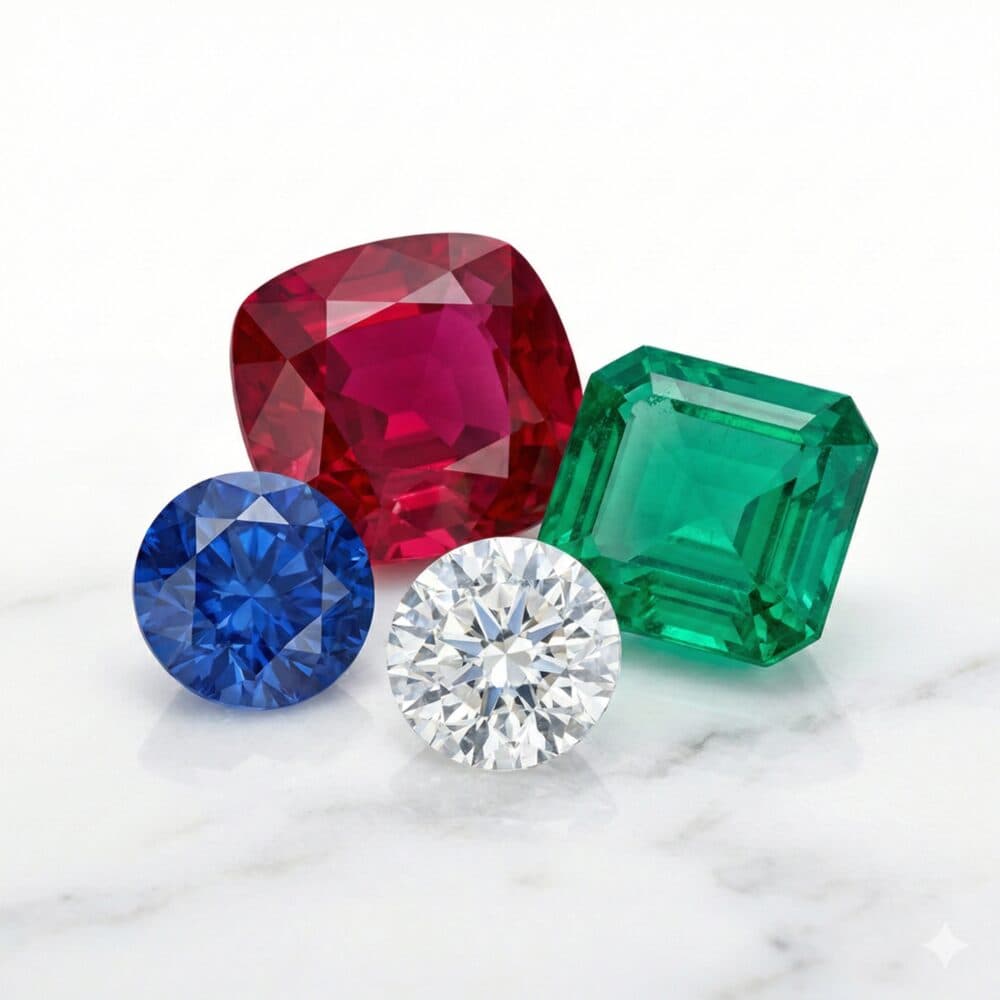
Why This Guide?
Buying gemstones can be overwhelming. Unlike diamonds which have standardized grading, colored gemstones are evaluated differently, and understanding these differences is key to making a smart purchase. This guide will help you navigate the world of gemstones with confidence.
Color determines value
Gems are treated
Origin premium possible
Need certification
The 4Cs of Colored Gemstones
Unlike diamonds where cut is king, color is the most important factor for colored gemstones
Color
Most Important Factor
of value
For colored gemstones, color is the primary determinant of value. The ideal color has rich saturation, moderate tone (not too light or dark), and a pleasing hue. Color distribution should be even throughout the stone.
Clarity
Natural Inclusions
of value
Unlike diamonds, some inclusions are acceptable in colored stones and may even be proof of natural origin. However, eye-visible flaws or inclusions that affect brilliance reduce value.
Cut
Maximizing Beauty
of value
A well-cut gemstone maximizes color, minimizes visible inclusions, and displays good brilliance. The cut should be symmetrical with good proportions for the stone type.
Carat Weight
Size Matters
of value
Larger gemstones are rarer and command premium prices per carat. However, a smaller stone with better color may be more valuable than a larger stone with poor color.
Major Gemstone Types
Explore the nine sacred gemstones of Vedic astrology
Ruby
माणिक्य (Manik)
The king of gems, Ruby represents the Sun and brings leadership, confidence, and success.
Pearl
मोती (Moti)
The gem of the Moon, Pearl brings emotional balance, peace of mind, and cooling energy.
Red Coral
मूंगा (Moonga)
The gem of Mars, Red Coral brings courage, strength, and protection from negativity.
Emerald
पन्ना (Panna)
The gem of Mercury, Emerald enhances intelligence, communication, and business success.
Yellow Sapphire
पुखराज (Pukhraj)
The gem of Jupiter, Yellow Sapphire brings wisdom, prosperity, and marital happiness.
Diamond
हीरा (Heera)
The gem of Venus, Diamond brings love, luxury, beauty, and creative success.
Blue Sapphire
नीलम (Neelam)
The gem of Saturn, Blue Sapphire brings quick results, wealth, and removes obstacles.
Hessonite
गोमेद (Gomed)
The gem of Rahu, Hessonite protects from negativity and brings success in unique endeavors.
Cat's Eye
लहसुनिया (Lehsunia)
The gem of Ketu, Cat's Eye enhances spirituality, intuition, and protection from hidden dangers.
Famous Origins
Origin significantly affects gemstone value - learn about the most prestigious sources
Kashmir, India
Known for velvety cornflower blue color with unique 'silk' inclusions. Kashmir sapphires are the most valuable sapphires in the world.
Burma (Myanmar)
Famous for 'pigeon blood' red rubies with intense fluorescence. Mogok Valley produces the world's finest rubies.
Colombia
Produces the most prized emeralds with vivid green color and characteristic inclusions called 'jardin'.
Sri Lanka (Ceylon)
Known for blue sapphires, yellow sapphires, padparadscha sapphires, and cat's eyes. Ceylon gems have excellent clarity.
South Sea (Australia)
Produces the largest and most valuable cultured pearls with exceptional luster and overtones.
Mediterranean (Italy)
Italian coral from the Mediterranean Sea is prized for its deep red color and is used in traditional Navratna jewelry.
Understanding Treatments
Most gemstones undergo some form of treatment. Understanding treatments helps you make informed decisions.
No Treatment
Completely natural, untreated gemstones command the highest prices. These stones are exactly as nature created them.
Value Impact:
Highest value - commands significant premium
Heat Treatment
The most common and widely accepted treatment. Heating improves color and clarity by mimicking natural geological processes.
Value Impact:
Standard market value - widely accepted
Minor Oil/Resin
Traditional treatment for emeralds using oil or resin to fill surface-reaching fissures. Degree of treatment affects value.
Value Impact:
Minor treatment accepted; heavy treatment reduces value
Diffusion
Color is introduced from outside the stone through heat and chemicals. Color may be surface-only or penetrate deeper.
Value Impact:
Significantly lower value - must be disclosed
Filling (Lead Glass)
Large fractures filled with lead glass to improve clarity. Common in lower-quality rubies. Requires special care.
Value Impact:
Major reduction in value - fragile, requires care
Irradiation
Exposure to radiation to change or enhance color. Stable and accepted for some gems, controversial for others.
Value Impact:
Accepted for some gems (blue topaz), less so for others
Our Disclosure Policy
At Swarn Shikhar, we fully disclose all treatments on our gemstones. Each stone comes with a certificate from an accredited laboratory that details any treatments applied. We believe in complete transparency so you can make an informed purchase decision.
Trusted Certification Labs
Always insist on certification from reputable gemological laboratories
GIA
USA/India
Gemological Institute of America
The world's foremost authority on diamonds, colored stones, and pearls. Has a laboratory at BKC, Mumbai.
Verify CertificateIGI
Belgium/India
International Gemological Institute
One of the largest independent gem certification laboratories globally with Mumbai office at BKC.
Verify CertificateGII
India
Gemmological Institute of India
India's first gem testing laboratory established in 1971. A GJEPC project headquartered in Mumbai, known for comprehensive gemstone testing and research.
Verify CertificateIIGJ
India
Indian Institute of Gems & Jewellery
Established by GJEPC and supported by the Government of India. Known for scientific gemstone analysis and certification adhering to international standards.
Verify CertificateHow to Verify a Certificate
Find the certificate number on the report
Visit the lab's official verification page
Enter the certificate number to view report
Compare details with your physical stone
Essential Buying Tips
Follow these guidelines for a successful gemstone purchase
Ready to Find Your Perfect Gemstone?
Our gemologists are here to help you choose the right stone based on your requirements and birth chart. Visit our store or contact us for expert guidance.