Silver Pooja Items Buying Guide: Purity, Hallmark & Pricing Explained
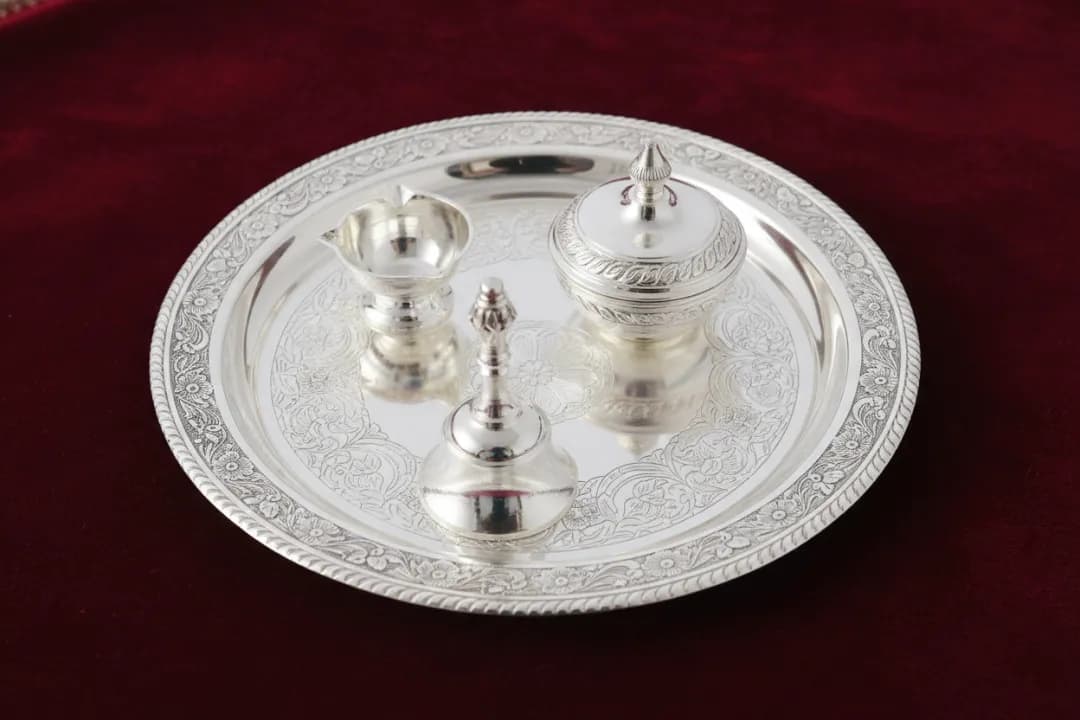
Indian families have used silver for centuries: for its spiritual significance, its natural antimicrobial properties, and the fact that it holds value. In Ayurveda, silver is believed to have cooling and purifying qualities, which is why it is the preferred metal for pooja items used in daily worship. Whether you are buying your first silver thali or adding to a family collection, this guide will help you make an informed purchase.
Understanding Silver Purity: 999 vs 925 vs German Silver
999 Fine Silver (99.9% Pure)
The highest purity grade available, and soft enough to suit murtis, decorative items, and investment pieces. Because of its softness, 999 silver items require careful handling and are not recommended for items that see heavy daily use. Best for: murtis, kalash, decorative diyas.
925 Sterling Silver (92.5% Pure)
The most popular choice for silver pooja items. Contains 92.5% silver and 7.5% copper, which adds durability without compromising the silver's beauty. Sterling silver balances purity against practicality. Best for: thalis, katoris, ghantis, panchpatra sets, and items that see daily use.
German Silver (0% Silver)
Despite the name, German silver contains no silver at all. It is an alloy of approximately 60% copper, 20% zinc, and 20% nickel. While it looks similar to silver and is tarnish-resistant, it has no precious metal value and is not suitable for traditional pooja rituals that require pure metals. It carries no BIS hallmark.
| Feature | 999 Fine Silver | 925 Sterling Silver | German Silver |
|---|---|---|---|
| Silver Content | 99.9% | 92.5% | 0% |
| BIS Hallmark | Yes (999) | Yes (925) | No |
| Durability | Soft, dents easily | Durable for daily use | Hard and durable |
| Best For | Murtis, decorative items | Thalis, daily-use items | Decorative/bulk items |
BIS Hallmark: Your Guarantee of Purity
Since September 2025, BIS has introduced voluntary hallmarking for silver jewellery and articles under the updated IS 2112:2025 standard. A BIS hallmarked silver item will have three marks:
- The BIS Standard Mark with the word "SILVER"
- The purity grade (e.g., 925 or 999)
- A unique six-digit HUID (Hallmark Unique Identification) code
You can verify any hallmarked item using the BIS Care mobile app by entering the HUID code. This reveals the article type, purity grade, hallmarking date, testing centre, and jeweller registration details.
At Swarn Shikhar, every silver pooja item is BIS hallmark certified with a verifiable HUID code.
How Silver Pooja Item Prices Are Calculated
The formula: Total Price = (Weight in grams × Silver Rate per gram × Purity factor) + Making Charges + GST (3%)
Example: A 50g sterling silver (925) pooja thali at ₹95/gram silver rate
- Silver value: 50 × 95 × 0.925 = ₹4,393.75
- Making charges (15%): ₹659.06
- Subtotal: ₹5,052.81
- GST (3%): ₹151.58
- Total: ₹5,204.39
Making charges vary: 10-15% for simple designs, 20-30% for detailed hand-engraved work, and up to 40% for highly detailed murtis. Making charges are generally not recoverable on resale.
How to Care for Your Silver Pooja Items
- Clean with a soft cloth after each use to remove fingerprints and residue
- For tarnished items, use a mild silver polish or a paste of baking soda and water
- Store in anti-tarnish cloth or zip-lock bags when not in use
- Avoid contact with perfumes, lotions, and harsh chemicals
- Do not use abrasive scrubbers on silver items
- For heavy tarnish, take items to a professional jeweller for cleaning
What to Ask Your Jeweller Before Buying
- What is the silver purity: 999 or 925?
- Is the item BIS hallmark certified? Can I see the HUID code?
- What is the making charge percentage or per-gram rate?
- Do you offer exchange or buyback for old silver?
- Is the weight mentioned gross weight or net silver weight?
Ready to Buy Silver Pooja Items?
Visit Swarn Shikhar Jewellers in Chembur or WhatsApp us for prices and availability.
Frequently Asked Questions
Is 925 silver good for pooja items?
Yes, 925 sterling silver works well for pooja items. It contains 92.5% pure silver with 7.5% copper for added durability, which suits items used daily like thalis, katoris, and ghantis. It carries the same spiritual significance as fine silver while being more resistant to wear.
How can I verify if my silver item is genuine?
Check for a BIS hallmark on the item. It should show the BIS mark with 'SILVER', the purity grade (925 or 999), and a 6-digit HUID code. Download the BIS Care app and enter the HUID code to verify the item's purity, hallmarking date, and jeweller details.
What is the difference between silver rate and silver jewellery price?
The silver rate is the market price per gram of pure silver. Silver jewellery price includes the silver value (weight × rate × purity), plus making charges (10-40% depending on design complexity), and 3% GST. Making charges cover the artisan's labour and craftsmanship.