Can German silver be used for pooja? What it is, and how to tell it from real silver
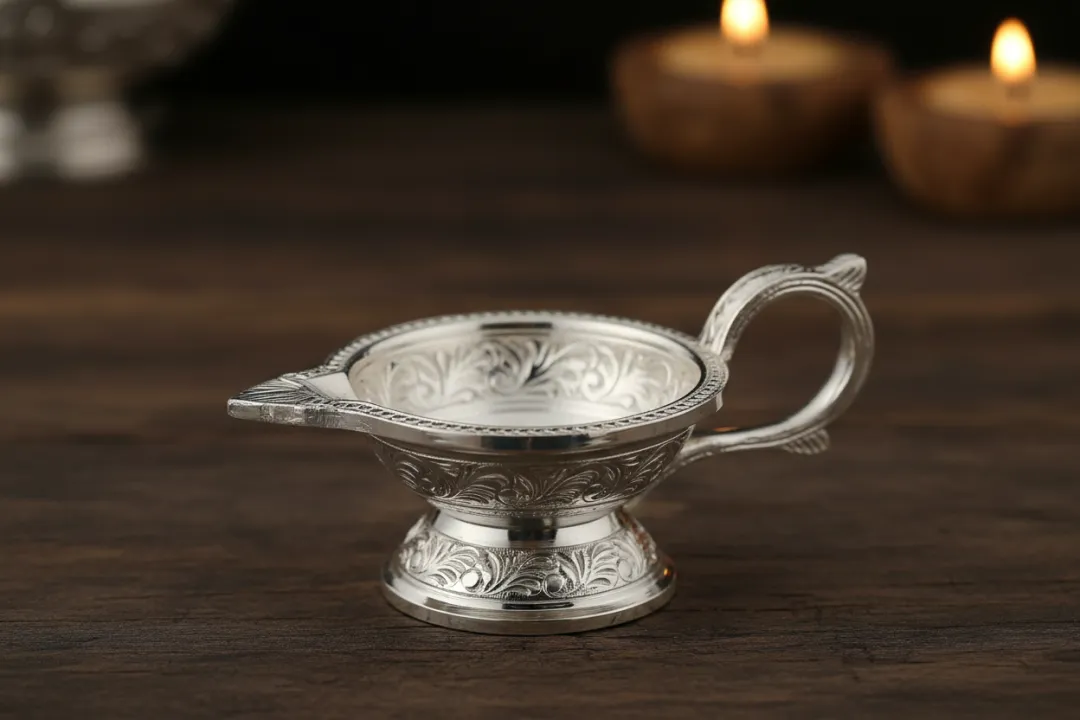
Yes, you can use German silver in the pooja room, and most Mumbai homes already do. It is not one of the traditional pooja metals, though, and it has no silver in it at all. So the answer comes in three parts: what the metal is, where tradition draws the line, and how to check what you already own.
What it is
Copper, zinc and nickel. 0% silver.
For pooja
Fine for trays and decor. Silver, copper or brass for what touches the deity.
To tell them apart
Stamp, weight, tarnish colour. Or one free test at our counter.
Is German silver allowed for pooja? Three honest answers
What tradition says
The old lists name the natural metals for worship: gold, silver, copper, brass, bronze, and clay for lamps. They ask you to avoid iron, steel and aluminium. German silver is a nickel alloy from the 1800s, so it appears on neither list. Families who keep to the letter of the tradition use the named metals for the ritual pieces.
What matters in practice
Nickel is a common skin allergen, and most German silver pieces are plated, so the plating wears where you wash and rub. That is why the panchpatra, achmani and kalash, which hold water that is sipped and offered, are usually silver or copper, and a decorative thali can be anything you like.
What we tell customers
Keep the German silver tray, the stand and the gift pieces. Put your money into the few things the ritual actually uses: one diya for the aarti, a panchpatra and achmani, a small katori for haldi and kumkum, and the murti. Those are small, so silver is affordable, and they last a lifetime.
German silver vs white metal vs real silver: what each is made of
The name is the whole confusion. Fine silver and sterling silver are silver. German silver and white metal are alloys of cheaper metals that happen to be white.
- Silver 99.9%
- Silver 92.5%
- Copper 7.5%
- Copper 60%
- Zinc 20%
- Nickel 20%
- Tin 55%
- Zinc 35%
- Other 10%
Shares are typical, not exact; makers vary the mix. White metal in the Indian market usually means a light tin and zinc casting, sometimes with nickel or lead. Some shops call German silver white metal too, which does not help.
Side-by-side comparison
| Feature | Real silver (925 or 999) | German silver | White metal |
|---|---|---|---|
| Silver content | 92.5% or 99.9% | None | None |
| Stamp to look for | 925, 999, or the BIS silver mark | EPNS, NS, or none | Usually none |
| Weight in hand | Heavy | About a fifth lighter | Light |
| Tarnish | Grey to black, polishes back | Yellow or green tinge, plating wears | Dulls, can pit |
| Dents and bends | Soft, marks easily | Hard, keeps shape | Soft, can crack |
| Skin contact | Fine for most people | Nickel can irritate | Depends on the mix |
| Resale | Sold back by weight at the day's rate | None | None |
| Priced by | Weight at today's rate plus making | The object | The object |
| Best for | Ritual pieces, gifts that hold value | Decor, trays, stands, bulk gifts | Decor |
The cost difference, without the made-up numbers
A German silver thali is priced like a brass one: a price for the object, whatever it weighs. A silver thali is priced the way gold is, by weight at the day's silver rate, plus making charges and 3% GST. So the gap between the two is, more or less, the price of the silver itself, and it moves with the rate. This is also why a silver piece can be sold back and a German silver piece cannot.
Not sure what you own, or what a silver version would cost today? Send a photo, and the weight if you know it. We reply with what it is and what the same piece costs in silver today.
Send a photo of my thaliSix ways to tell silver from German silver
1Turn it over and look for a stamp
Real silver is usually stamped 925 or 999. Since last September it can also carry the BIS silver mark, with a short code you can look up in the BIS Care app. German silver is stamped EPNS or NS, which both mean plated or nickel alloy, or it has no stamp at all.
2Feel the weight
Silver is denser. A silver diya or katori feels about a fifth heavier than a German silver one of the same size. If a thali the size of a dinner plate feels light, it is not silver.
3Look at the tarnish
Silver goes grey and then black in Mumbai's humidity, evenly, and polishes back. German silver develops a yellowish or greenish tinge as the copper shows through, and worn plating leaves patches.
4Try a magnet
Neither silver nor German silver sticks to a magnet, so this test only rules out steel. Use it to catch a steel thali sold as silver, not to tell silver from German silver.
5Put an ice cube on it
Silver conducts heat better than any other metal, so an ice cube on a silver plate starts melting almost at once, faster than on the same size of German silver beside it. Try it at home; it costs nothing.
6Let us test it, free
Bring the piece to the counter. The purity machine reads the metal in about a minute, nothing gets scratched, and you see the result on the screen. It is the same test we use on old gold.
Which metal for which pooja item
This is the working list we use at the counter. It follows the traditional metals for anything used in the ritual and lets German silver do the decorative jobs.
| Item | Usual metal | Why |
|---|---|---|
| Lakshmi Ganesh murti | Silver, brass or panchdhatu | The murti is worshipped; keep it in a traditional metal |
| Diya for the aarti | Silver or brass | Silver stays cool to hold; brass is the everyday choice |
| Kalash | Copper, silver or brass | Holds the water for the ritual |
| Panchpatra and achmani | Silver or copper | The water is sipped and offered |
| Pooja thali (the ritual one) | Silver, brass or bronze | Carries the diya, kumkum, rice and flowers |
| Katori for haldi and kumkum | Silver | Small, so silver is affordable here |
| Decorative thali, gift tray, stand | German silver is fine | Nothing is offered from it |
| Ghanti (bell) | Brass, bronze or silver | Chosen for the sound as much as the metal |
Our silver pooja pieces are 925 or 999 silver, priced by weight. Browse the silver pooja items, or start with the small ritual pieces: diya, panchpatra and achmani, katori and Lakshmi Ganesh murti.
Real silver, tested in front of you
Swarn Shikhar Jewellers, Shop No 6, Aashirwad Building, Narayan Gajanan Acharya Marg, Chembur, Mumbai 400071.
Silver pooja items by weight, and a free purity test on anything you already own, for over 40 years.
Frequently asked questions
Can we use German silver for pooja?
Yes, you can keep and use it. German silver is not one of the traditional pooja metals (gold, silver, copper, brass, bronze and clay), so most families use it for the things around the puja, such as a decorative thali, a lamp stand or a gift tray, and keep real silver, copper or brass for the pieces that touch the deity or hold what is offered. If your family follows a stricter tradition, ask your elders or your pandit; there is no single rule.
Is German silver good for pooja items you use every day?
It is easy to look after: it does not tarnish black the way silver does and it does not dent. The trade-off is that it contains nickel, a common skin allergen, and most pieces are plated, so the plating wears at the edges with daily washing. For a panchpatra, achmani, kalash or anything that holds water or food you offer, silver, copper or brass are the usual choices.
Does German silver contain any real silver?
No. German silver, also sold as nickel silver, is an alloy of roughly 60% copper, 20% zinc and 20% nickel. The name comes from its colour, not from any silver in it. It has no resale value as a precious metal.
Is white metal the same as German silver?
Not quite. In the Indian market, white metal usually means a light cast alloy of tin and zinc, sometimes with nickel or lead, used for decorative pieces. German silver is a copper, zinc and nickel alloy, a little heavier and harder, and it takes a brighter polish. Shops use both names loosely, and neither contains silver.
What is the cost difference between silver and German silver?
A German silver piece is priced as an object, the way a brass or steel piece is. A real silver piece is priced by its weight at the day's silver rate plus making charges, so the difference is roughly the price of the silver itself. Send us a photo or the weight and we will tell you which it is and what a silver equivalent would cost today.
Can we keep German silver in the pooja room?
Yes. Nothing in the traditional lists names German silver, because the alloy did not exist when they were written. The metals those lists ask you to avoid are iron, steel and aluminium. Keep German silver for decoration and serving, and let the pieces used in the ritual itself be silver, copper, brass or clay.
How do I know if my old thali is real silver?
Look for a 925 or 999 stamp, or the newer BIS silver mark with a short code under it. Real silver is about a fifth heavier than German silver of the same size, and it tarnishes grey or black rather than greenish. If there is no stamp, bring it to the counter. We put it under the purity machine in front of you, free, and nothing gets scratched.