What is KDM gold? Meaning, why it was banned, and what your KDM jewellery is worth now
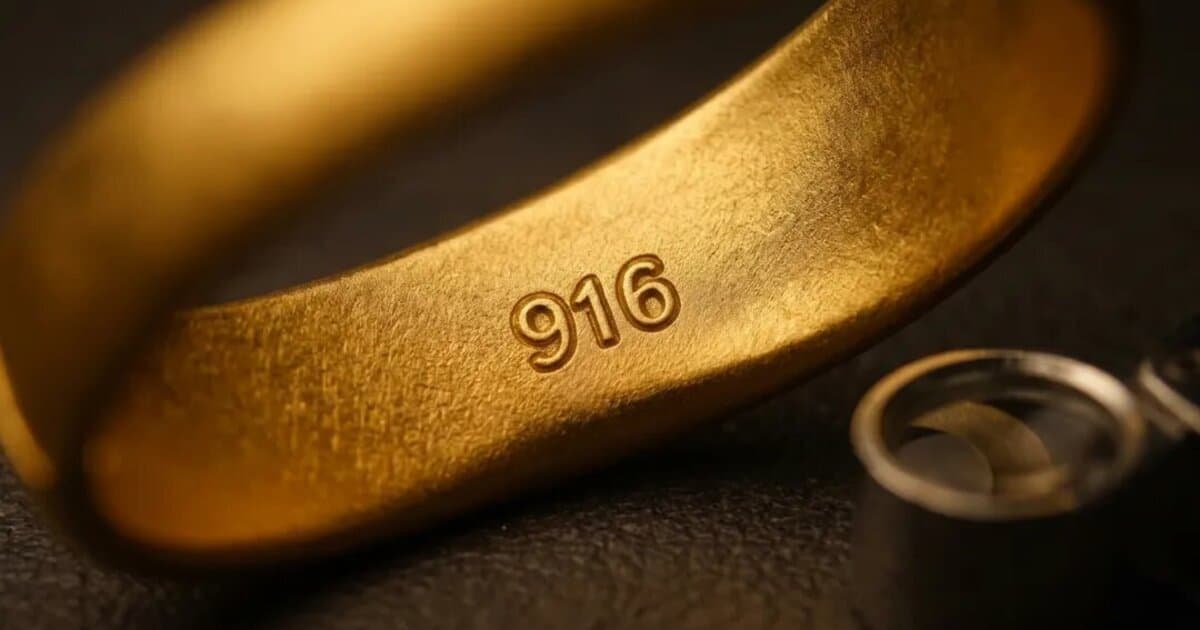
KDM is not a kind of gold, and it is not a purity. It is a stamp that says the piece was joined with a solder that had cadmium in it. BIS removed cadmium from hallmarked jewellery because the fumes were hurting the people at the bench, so a KDM piece can no longer be hallmarked. The gold in it is still gold, and we buy and exchange it every week.
KDM means
Cadmium solder. Not a purity grade.
Is it banned?
From hallmarked gold, yes. Owning or selling old pieces, no.
What it is worth
Tested purity, times weight, times today's rate.
KDM gold, in plain words
To make a bangle or a chain, a goldsmith joins pieces with solder, a metal that melts before the gold does. For decades the solder of choice was about 92% gold and 8% cadmium, because it flows at a low temperature and leaves a clean joint. Pieces made that way were stamped KDM, from the German word for cadmium. A stamp of 916 KDM meant 22 karat gold, cadmium solder.
The problem was never the wearer. Cadmium fumes at the bench damage the lungs and kidneys, and the metal can cause cancer. So the Bureau of Indian Standards wrote cadmium out of the jewellery standard, and workshops moved to solders without it.
Is KDM gold banned in India?
Here is the exact position. Cadmium is banned from gold jewellery that carries the BIS hallmark, and in Mumbai every jeweller has to sell hallmarked gold. So new KDM jewellery cannot be sold as hallmarked. The KDM jewellery already in your locker is legal to keep, wear, sell and exchange.
2000
BIS begins hallmarking gold jewellery, voluntary at first.
2016
The BIS jewellery standard (IS 1417) rules that the metal used has to be free of cadmium. KDM solder is out of hallmarked gold.
June 2021
Hallmarking, with a six-character code on every piece, becomes compulsory, district by district.
July 2025
9 karat (375) added as a hallmark grade, voluntary so far.
March 2026
Compulsory hallmarking now covers 380 districts, and more than 60 crore pieces carry the code.
Sources: the BIS gold jewellery standard, IS 1417, for the cadmium rule; the Ministry of Consumer Affairs release of 12 March 2026 for the district count, the number of pieces and the 9 karat grade.
Read the stamp on your piece
Turn the bangle over, or look at the back of the pendant near the loop. Each stamp promises something different, and some promise nothing.
Tap the stamp you see on your piece
Seen on
Any gold jewellery hallmarked since 2021. Three marks in a row: the BIS logo, the purity, and a six-character HUID.
What it promises
A BIS-approved testing centre checked this piece and recorded it against that code. 22K916 means 91.6% gold. You can look the code up yourself in the BIS Care app.
What it does not
It does not tell you the weight, the making charge or the resale rate. Those come from the bill and the day's rate.
A hallmark can be checked. Open the BIS Care app, choose Verify HUID and type the six characters.
How much of it is actually gold
The three digits on a hallmark say how many parts in a thousand are gold: 916 is 916 parts gold, 84 parts other metal. That other metal, usually copper and silver, gives the colour and the strength. The gold number is the one that decides resale value.
- Gold 99.9%
- Gold 91.6%
- Alloy 8.4%
- Gold 75%
- Alloy 25%
- Gold 58.5%
- Alloy 41.5%
- Gold 37.5%
- Alloy 62.5%
What your old KDM jewellery is worth now
The same four steps as any old gold. The only difference with a KDM piece is that the reading may come in a little under 22 karat, because the solder at every joint is part of the average.
Step 1
Weigh
On the counter scale, in front of you. Stones, if any, are noted before the weight is taken.
Step 2
Test
The purity machine reads the gold in about a minute, with no cutting and no acid. You see the figure on the screen.
Step 3
Price
The purity it read, times the weight, times today's rate. Solder and stones come off. The making charge you once paid does not come back.
Step 4
Choose
Take the value against a new piece, or as payment. Either way you leave with the reading on paper.
Bring the piece, or send a photo first. The test is free whether or not you sell, and you get the reading on paper. Details of what comes off and what does not are on the old gold exchange page.
Get my KDM piece tested freeBuying new gold: a four-second check
Three marks, in a row
The BIS logo, the purity written two ways (22K916, 18K750, 14K585), and a six-character code called the HUID. Older pieces also carried the testing centre and jeweller marks; since 2021 the code replaces them.
Look up the code
Open the BIS Care app, choose Verify HUID and type the six characters. It shows which jeweller registered the piece and the purity on record. Do it at the counter, before you pay.
Match the bill
The bill should show the same purity, then the weight, the rate, the making charge and 3% GST, each on its own line. That bill is what you bring when you sell or exchange the piece one day.
Old KDM gold, valued in front of you
Swarn Shikhar Jewellers, Shop No 6, Aashirwad Building, Narayan Gajanan Acharya Marg, Chembur, Mumbai 400071.
Hallmarked gold, a free purity test and a fair exchange, for over 40 years.
Frequently asked questions
What does KDM mean in gold?
KDM comes from cadmium (Kadmium in German). It marks jewellery that was joined with a cadmium-based solder, usually about 92% gold and 8% cadmium. The stamp tells you how the piece was made, not how pure it is.
What is the full form of KDM?
There is no official full form. KDM is a trade shorthand for cadmium, the metal in the solder. It is not a BIS term and it is not a purity grade like 916 or 750.
Is KDM gold banned in India?
Cadmium is banned from any gold jewellery that carries the BIS hallmark; the BIS jewellery standard says the metal has to be free of it. Hallmarking has been compulsory since June 2021 and now covers 380 districts, Mumbai included, so a jeweller cannot sell a KDM piece as hallmarked gold. Keeping, wearing, selling or exchanging the KDM jewellery you already own is completely legal.
Is 916 KDM gold the same as 22 karat?
916 means 91.6% gold, which is 22 karat. On a piece stamped 916 KDM, the 916 describes the gold and the KDM describes the solder. In practice older KDM pieces often test a little below 22 karat, because the solder at every joint lowers the average. Only a test tells you the real figure.
What is the difference between KDM and hallmark gold?
A hallmark is a check done by a BIS-approved testing centre, stamped as the BIS mark, the purity and a six-character code you can look up in the BIS Care app. KDM is the maker's own stamp with no register behind it. Hallmarked gold has to be cadmium-free, so a piece cannot be both.
Can I exchange or sell my old KDM jewellery?
Yes. Bring it to the counter. We weigh it, put it under the purity machine in front of you, and value the gold at the purity it reads and today's rate. Stones and solder come off, and the making charge you paid years ago does not come back, because that part was never gold.
Is KDM gold harmful to wear?
The harm from cadmium came at the workbench. The fumes released while soldering damage the lungs and kidneys of the person doing the work, and cadmium can cause cancer. That is why BIS removed it. Wearing an old KDM piece is not considered a risk, so there is no reason to stop wearing family jewellery.